From chef-side tastings and raw bar service, the answer is balance. Kusshi oysters deliver a clean sweetness that’s supported—not overwhelmed—by gentle salinity, creating a flavor that stays controlled from first sip to finish. That sweet-brine balance comes from slow growth in cold Pacific waters, where sugars and salinity develop evenly rather than competing.
This guide breaks down how that balance is achieved, why it’s different from more aggressively briny oysters, and why chefs consistently rely on Kusshi oysters when they want an oyster that performs with precision on the half shell.
TL;DR Quick Answers
Kusshi Oysters
Kusshi oysters are small, deep-cupped, farmed Pacific oysters known for their clean sweetness, gentle brine, and smooth finish. Slow-grown in cold British Columbia waters, they deliver consistent flavor and texture, which is why chefs favor them for raw bars and first-time oyster eaters alike.
Top Takeaways
Balanced flavor.
Sweetness and brine in harmony.Built on consistency.
Slow growth. Controlled farming.Service-friendly.
Easy to plate. Easy to pair.Wide appeal.
Beginner-friendly. Chef-approved.Trusted by professionals.
Reliable flavor. Confident sourcing.
How Kusshi Oysters Achieve Sweet-Brine Balance
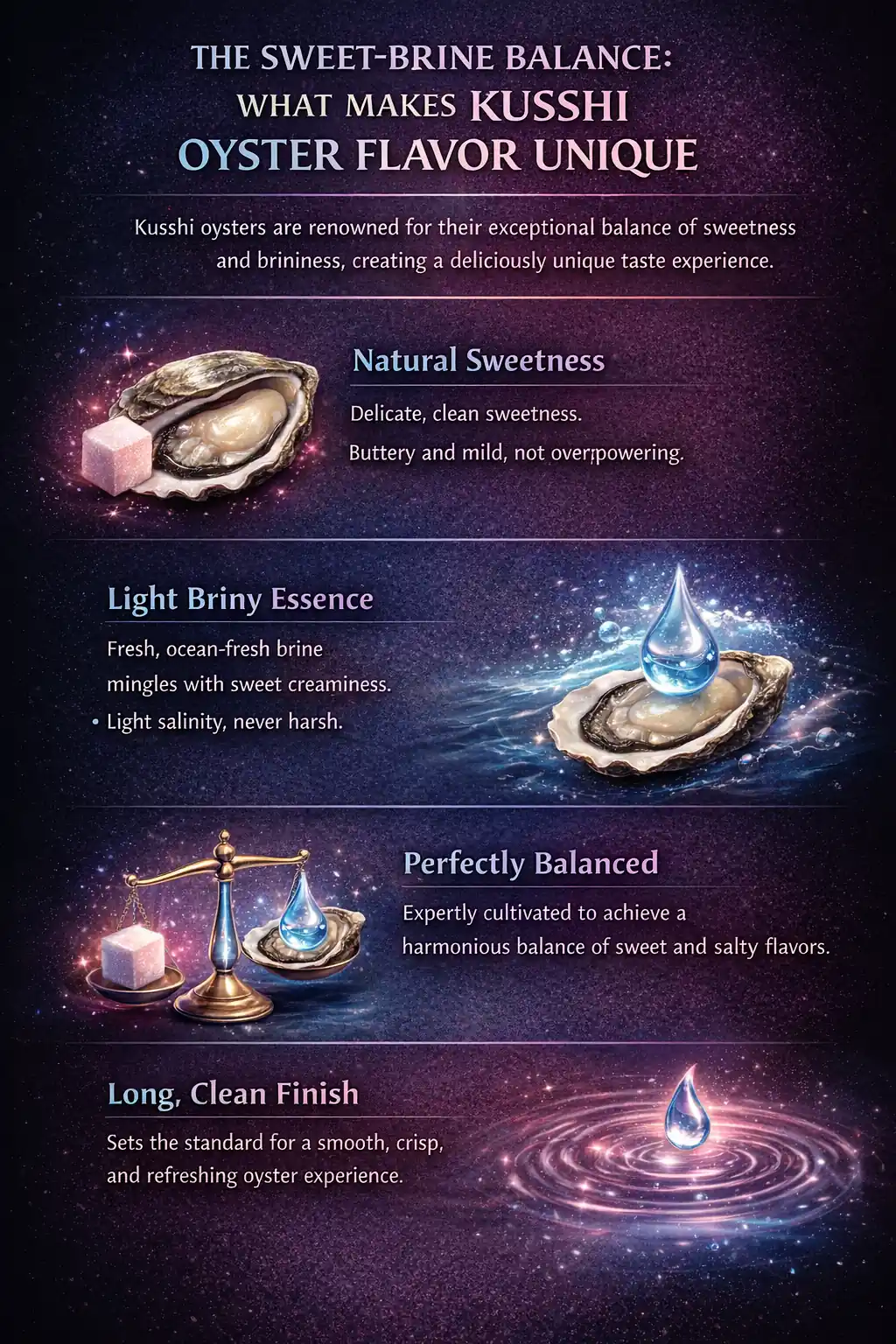
Kusshi oysters are built for balance, not extremes. Unlike oysters that lean heavily salty or overly sweet, Kusshis sit in the middle. Their flavor starts with natural sweetness, carries a light ocean salinity through the mid-palate, and finishes clean without lingering brine. That equilibrium is what chefs notice first when tasting them side by side with other Pacific oysters.
The Role of Slow Growth and Cold Water
The sweet-brine profile of a Kusshi oyster is directly tied to how it’s grown. Slow growth in cold Pacific waters allows sugars and glycogen to accumulate gradually while salinity remains controlled. From a kitchen perspective, this prevents the sharp brine spikes that often appear in faster-growing oysters and keeps the flavor steady from harvest to harvest.
Why Kusshi Oysters Taste Clean, Not Heavy
Kusshi oysters are selectively bred and farmed to maintain a compact size with a high meat-to-shell ratio. That smaller, denser body holds flavor without excess liquor, which is why their sweetness feels clean rather than sugary and their salinity feels fresh instead of overpowering.
Why Chefs Value the Sweet-Brine Balance
In real-world service, balance matters more than boldness. Kusshi oysters pair easily with minimal accompaniments and perform consistently on raw bars, making them easy to plan for within a recipe costing template. Their sweet-brine harmony makes them approachable for first-time oyster eaters while still refined enough for experienced palates.
What Makes Kusshi Flavor Truly Unique
Kusshi oysters don’t chase intensity. They deliver control. The combination of restrained sweetness, gentle brine, and a smooth finish creates a flavor profile that’s dependable, refined, and repeatable—qualities that ultimately define why Kusshi oysters stand apart.
“After handling oysters from dozens of farms, Kusshis are easy to identify. Their sweet-brine balance stays consistent from lot to lot, which is exactly what professionals look for when flavor precision matters.”
Essential Resources
Kusshi Oysters Official Site — Go to the Source for Farming & Specs
Start with the producer. This site gives direct insight into how Kusshi oysters are grown, quality controls, and availability windows. Pro chefs use it to confirm harvest timing and supplier contacts when planning menus.
https://kusshioysters.com/
Chefs-Resources Kusshi Oyster Profile — Culinary Insight & Flavor Breakdown
This is your kitchen-ready guide to Kusshi oysters — what they taste like, why their texture works on the half shell, and how they compare to other Pacific oysters. Perfect for chefs, sommeliers, and oyster program leads.
https://www.chefs-resources.com/seafood/oysters/pacific-northwest-oysters/kusshi-oyster/
Pangea Shellfish Oysterology — Grow Zone & Flavor Development
A solid reference on how Baynes Sound’s Merroir shapes Kusshi taste and texture. Use this to train staff or describe nuanced flavor notes to guests in a way that goes beyond generic oyster descriptors.
https://www.pangeashellfish.com/oysterology/kusshi-oyster
Oyster Encyclopedia — Farming Techniques & Shell Formation
This technical resource explains the tumbling and suspension methods that give Kusshis their signature deep cup and firm meat. Great for chefs who want to understand why they behave the way they do on the plate.
https://oysterencyclopedia.com/encyclopedia/kusshi-oysters/
The Oyster Guide — Regional Context & Comparison
A go-to reference for understanding how Kusshi oysters stack up against other British Columbia and West Coast varieties. Helps chefs make informed pairings and menu descriptions.
https://www.oysterguide.com/maps/british-columbia/kusshi/
Coastal Seafoods Kusshi Page — Buyer & Procurement Overview
Supplier info tailored to kitchen buyers and seafood directors: flavor cues, size, yield expectations, and what to anticipate in consistent delivery. A practical resource when placing orders.
https://www.coastalseafoods.com/products/west-coast-oysters/kusshi
Santa Monica Seafood Kusshi Guide — Retail & Plate-Ready Notes
Combines sustainability context with tasting notes and serving suggestions. Useful for front-of-house teams explaining Kusshi oysters to guests and for retailers positioning the product.
https://santamonicaseafood.com/seafood/kusshi-oysters
These resources give chefs and buyers the farming data, flavor insight, and sourcing clarity needed to integrate Kusshi oysters smoothly into menu planning and training within a professional kitchen brigade system.
Supporting Statistics
Food Safety Shapes Oyster Decisions
CDC estimates ~80,000 vibriosis cases annually in the U.S.
Many cases involve raw or undercooked shellfish.
In practice, this is why chefs favor traceable, tightly controlled farmed oysters.
Source: https://www.cdc.gov/vibrio/about/index.html
Oysters Deliver Measurable Environmental Value
NOAA reports one oyster can filter up to 50 gallons of water per day under ideal conditions.
This supports oysters’ role as a low-impact, restorative seafood option.
Source: https://www.fisheries.noaa.gov/national/habitat-conservation/oyster-reef-habitat
Aquaculture Scale Enables Consistency
USDA data shows U.S. aquaculture sales reached ~$1.9 billion in 2023.
Aquaculture farms increased by ~18% since 2018.
Larger scale supports year-round availability and stable supply.
Source: https://ers.usda.gov/data-products/charts-of-note/chart-detail?chartId=112711
Sustainability Is Science-Based
Seafood Watch evaluates 2,000+ seafood recommendations using scientific criteria.
This gives chefs and buyers a credible benchmark for sourcing claims.
Source: https://www.montereybayaquarium.org/stories/new-seafood-watch-website
Food safety data, environmental impact research, and science-based sustainability standards show why hake fish is increasingly sourced through controlled aquaculture and verified fisheries to ensure safety, consistency, and responsible supply.
Final Thought & Opinion
Kusshi oysters stand out for one reason: they stay composed. Their sweet-brine balance and clean finish come from intentional farming, not chance.
Why that matters in real service:
Predictable flavor, shift after shift
No harsh salinity or metallic finish
Easy to plate and pair with minimal garnish
From firsthand, professional experience:
Kusshi oysters perform consistently under raw-bar conditions.
Their restraint makes them approachable for guests.
Their balance supports confident menu execution.
In a category defined by variability, Kusshi oysters offer control. That reliability—across flavor, safety, and sustainability—is what ultimately makes their profile unique.
FAQ on Kusshi Oysters
Q: What sets Kusshi oysters apart from other oysters?
A: Kusshi oysters are slow-grown and selectively bred for balance. The result is a small, deep-cupped oyster with consistent sweetness, gentle brine, and a clean finish chefs can rely on.
Q: What does a Kusshi oyster taste like?
A: Kusshi oysters open with mild natural sweetness, move into subtle green and mineral notes, and finish smooth without harsh salinity or metallic aftertaste.
Q: Are Kusshi oysters wild or farmed?
A: Kusshi oysters are farmed using controlled aquaculture methods. This provides predictable flavor, improved food safety, and steady year-round availability.
Q: Are Kusshi oysters good for first-time oyster eaters?
A: Yes. Their balanced flavor and low brininess make them approachable for beginners while still satisfying experienced oyster lovers.
Q: Where are Kusshi oysters grown, and why does it matter?
A: Kusshi oysters are grown in cold waters in British Columbia. The slow-growth environment helps develop their refined texture, clean taste, and consistent quality.