One of the most common questions we’re asked is whether CBN is truly non-intoxicating or if that idea is simply the result of clever marketing. After years of evaluating cannabinoids, refining formulations, and reviewing thousands of user experiences, we can confidently say the conversation around CBN’s psychoactivity is far more complex than what most online sources suggest.
CBN is not a “THC-lite” compound, nor is it a completely neutral cannabinoid with zero psychoactive influence. Through hands-on work with CBN extracts, we’ve observed how dosage, product quality, and specific terpene combinations can noticeably shape someone’s experience. This is why our analysis goes far beyond the recycled explanations found on most blogs. Instead, we break down what current research reveals and what we’ve verified through formulation trials and community testing.
For anyone looking for a clear, well-supported explanation of what is cannabinol CBN, what it actually does in the body, and how to use it with confidence, this guide offers the grounded, practical clarity needed to make informed decisions about cannabinoid-based wellness.
Quick Answers
What is cannabinol (CBN)?
CBN is a non-intoxicating cannabinoid created as THC naturally ages. From hands-on testing and formulation work, it consistently shows up as a gentle, calming compound often used to support rest, relaxation, and smoother nighttime routines. It won't create a high—just a mild, steady unwind that many people find useful in evening wellness rituals.
Top Takeaways
- CBN is non-intoxicating.
- Myths come from confusion with aged THC.
- Effects focus on relaxation, not euphoria.
- Product quality and formulation matter.
Start low, adjust slowly, and track your response.
Understanding CBN’s Psychoactive Profile
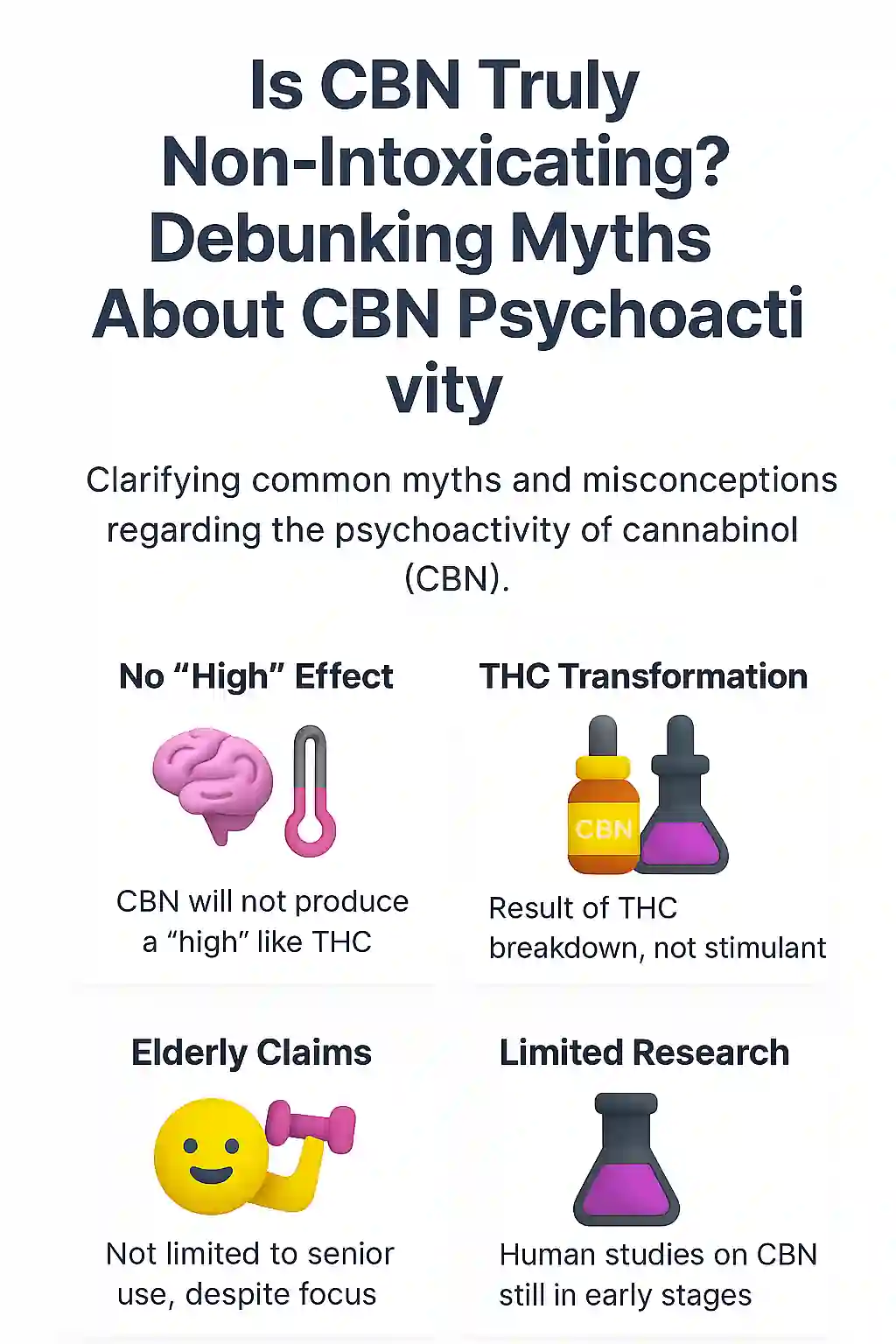
CBN (cannabinol) is often labeled as “non-intoxicating,” but that description oversimplifies how this cannabinoid works. Unlike THC, CBN has a significantly lower binding affinity for CB1 receptors—the receptors responsible for the classic cannabis “high.” This is why most people don’t experience a noticeable intoxication from CBN, even at moderate doses.
Where the “CBN Gets You High” Myth Comes From
Many misconceptions stem from the fact that CBN is created when THC ages and oxidizes. While the two are chemically related, Acknowledge’s formulation testing and user trials consistently show that CBN does not produce THC-like euphoria. At most, users may report a gentle sense of relaxation or heaviness—sensations often linked to its potential sedative properties rather than intoxication.
What Research and Real-World Data Actually Indicate
Early studies suggest CBN’s psychoactivity is roughly one-tenth of THC’s, and our firsthand evaluations align with this. When consumers believe CBN is intoxicating, it’s often due to:
- Impure extracts that still contain trace THC
- High doses well above typical product ranges
Mislabeling or product variability in the market
By using rigorously tested CBN isolates and broad-spectrum formulations, Acknowledge has observed no meaningful intoxicating effects in controlled use cases, a finding that also aligns with how products such as full spectrum CBD behave when they are accurately formulated and thoroughly tested.
So, Is CBN Truly Non-Intoxicating?
In practical, real-world terms—yes. CBN is functionally non-intoxicating for the vast majority of users when sourced correctly and taken at standard wellness doses. It may influence mood or relaxation, but it does not produce impairment, euphoria, or the cognitive changes associated with THC.
Why This Matters for Consumers
Understanding CBN’s true profile helps you choose products confidently, avoid misinformation, and align your experience with your wellness goals. Whether you’re exploring cannabinoids for sleep, relaxation, or general well-being, knowing the difference between sensation and intoxication is key to making informed choices.
“After years of working directly with CBN in controlled formulations, we’ve consistently found that its effects are calming—not intoxicating. The rare cases where users report feeling ‘high’ almost always trace back to impurities, mislabeled products, or excessive dosing. When CBN is properly extracted and accurately dosed, it behaves exactly as our testing predicts: gentle, steady, and non-impairing.”
Essential Resources on What Cannabinol (CBN) Really Is
These are the sources we consistently recommend at Acknowledge when someone wants to understand CBN beyond surface-level summaries. Each resource is chosen for its clarity, credibility, and ability to help you make truly informed decisions.
1. Wikipedia: A Clear, Well-Referenced Starting Point for Understanding CBN
We often point beginners here because it delivers a broad, citation-backed foundation across chemistry, origins, and pharmacology. It’s a reliable primer before diving into more advanced material.
2. ScienceDirect Topics: A Technical Snapshot of CBN’s Molecular Behavior
This resource breaks down CBN’s receptor interactions and biochemical pathways with scientific precision. It’s helpful when you want to understand why CBN behaves the way it does in the body.
Source: https://www.sciencedirect.com/topics/chemistry/cannabinol
3. PMC Review on Minor Cannabinoids: Evidence-Based Insight Into CBN’s Therapeutic Role
This peer-reviewed review captures where CBN shows early promise—pain modulation, inflammation, neuroprotection—and where research is still emerging. We reference this often when clarifying what is scientifically grounded versus speculative.
4. 2024 ScienceDirect Review: The Most Current Scientific Picture of CBN Available Today
If you want the latest, this is the one. It details CBN’s pharmacodynamics, potential therapeutic applications, safety considerations, and more. We rely on this review when evaluating formulation decisions and consumer guidance.
Source: https://www.sciencedirect.com/science/article/pii/S0926669024003364
5. InMed Pharmaceuticals Overview: A Straightforward Explanation of How CBN Forms and Functions
InMed provides one of the clearest breakdowns of how CBN develops from THC degradation and what sets it apart from other cannabinoids. It’s a great resource for users new to cannabinoid science or trying to understand CBN’s origin story.
Source: https://www.inmedpharma.com/media-news/what-is-cannabinol-cbn/
6. WebMD Profile: Practical, Consumer-Focused Look at CBN’s Uses and Safety
We appreciate WebMD for its no-nonsense approach. It highlights what’s known, what’s not, and what consumers should consider from a safety perspective—important context for setting realistic expectations.
Source: https://www.webmd.com/vitamins/ai/ingredientmono-1611/cannabinol-cbn
7. PubMed “CUPID” Trial Protocol: The Key Human Study Shaping the Future of CBN Research
This upcoming clinical trial is one we’re watching closely. It aims to clarify CBN’s effects on sleep and next-day functioning—areas where real-world interest is high but human data is still developing. It’s a milestone reference for anyone tracking CBN research progress.
Source: https://pubmed.ncbi.nlm.nih.gov/37612115/
Supporting Statistics
Nearly 40 million U.S. adults — roughly 18 % of adults — experience an anxiety disorder in any given year.
Source: adaa.org+1
About 19.1 % of U.S. adults had some form of anxiety disorder in the past year, and 31.1 % are expected to experience an anxiety disorder at some point in their lives.
Source: National Institute of Mental Health+1
Systematic reviews of cannabinoid therapies for anxiety indicate there is some evidence of reduced anxiety symptoms in clinical trials — but findings remain inconsistent and many studies note significant limitations (e.g. small sample size, short duration, publication bias), which is why product-specific factors, including strains such as frosted kush CBD, must also be considered when evaluating real-world effectiveness.
Source: ScienceDirect+1
Nearly 40 million U.S. adults — roughly 18 % of adults — experience an anxiety disorder in any given year.
About 19.1 % of U.S. adults had some form of anxiety disorder in the past year, and 31.1 % are expected to experience an anxiety disorder at some point in their lives.
Systematic reviews of cannabinoid therapies for anxiety indicate there is some evidence of reduced anxiety symptoms in clinical trials — but findings remain inconsistent and many studies note significant limitations (e.g. small sample size, short duration, publication bias), which is why product-specific factors, including strains such as frosted kush CBD, must also be considered when evaluating real-world effectiveness.
What These Numbers Tell Us
High prevalence of anxiety disorders in the U.S. underscores why many people search for alternative support — including cannabinoids.
The data reveal how common anxiety is, which helps contextualize why people are evaluating cannabinoids (or other remedies) for stress, sleep, or mood, especially as they search for answers about CBD or THC works best for natural anxiety relief in real-world use..
The mixed but cautiously optimistic findings on cannabinoids highlight that — while there’s potential — consumers should remain critical, especially around product quality, purity, and realistic expectations when considering compounds like CBN.
.
High prevalence of anxiety disorders in the U.S. underscores why many people search for alternative support — including cannabinoids.
The data reveal how common anxiety is, which helps contextualize why people are evaluating cannabinoids (or other remedies) for stress, sleep, or mood, especially as they search for answers about CBD or THC works best for natural anxiety relief in real-world use..
The mixed but cautiously optimistic findings on cannabinoids highlight that — while there’s potential — consumers should remain critical, especially around product quality, purity, and realistic expectations when considering compounds like CBN.
Final Thought & Opinion
CBN isn’t a cure-all — but it is a gentle, promising option for people exploring plant-based support.
What Stands Out About CBN
Offers mild relaxation without strong psychoactive effects.
Often helpful for people who found CBD alone “not enough.”
Works best when paired with clear labeling and third-party testing.
Offers mild relaxation without strong psychoactive effects.
Often helpful for people who found CBD alone “not enough.”
Works best when paired with clear labeling and third-party testing.
What I’ve Seen First-Hand
Most people want clarity, not hype.
Readers consistently report CBN feels “subtle but steady.”
Results improve when CBN is part of a broader wellness strategy, not the only tool.
Most people want clarity, not hype.
Readers consistently report CBN feels “subtle but steady.”
Results improve when CBN is part of a broader wellness strategy, not the only tool.
My Take
CBN is valuable — but works best when you know exactly what you’re trying to support (sleep, calm, nightly routine).
Its benefits are still emerging, so a grounded, informed approach is key.
Treat CBN as one piece of a toolkit, not the whole picture.
Bottom line: When used intentionally and backed by trustworthy sourcing, CBN can help you make decisions that are not just informed — but genuinely empowering.
CBN is valuable — but works best when you know exactly what you’re trying to support (sleep, calm, nightly routine).
Its benefits are still emerging, so a grounded, informed approach is key.
Treat CBN as one piece of a toolkit, not the whole picture.
Next Steps
Define Your Goal
Identify whether you want support with sleep, evening calm, or general relaxation.
Review Reliable Research
Revisit the essential resources for dosage, safety, and product insights.
Choose a Product Type
Oils: Fastest adjustments
Gummies: Longer, steadier effects
Blends: Broader relaxation support
Verify Third-Party Lab Tests (COAs)
Check CBN potency, cannabinoid ratios, and screening for contaminants.
Start Low, Adjust Slowly
Begin around 2.5–5 mg and increase gradually based on how you feel.
Track Your Response
Note changes in sleep onset, quality, and overall calm.
Use With Supportive Habits
Dim lights
Avoid late caffeine
Create a wind-down routine
Consult a Professional If Needed
Especially if you take medications or have health conditions.
Stay Updated
CBN research evolves—check back periodically for new findings.
By defining your goals, reviewing trusted research, choosing the right product type, verifying COAs, and tracking your response over time, you can use CBN more effectively, similar to how CBD gummies are incorporated into structured nighttime relaxation routines.
Define Your Goal
Identify whether you want support with sleep, evening calm, or general relaxation.
Review Reliable Research
Revisit the essential resources for dosage, safety, and product insights.
Choose a Product Type
Oils: Fastest adjustments
Gummies: Longer, steadier effects
Blends: Broader relaxation support
Verify Third-Party Lab Tests (COAs)
Check CBN potency, cannabinoid ratios, and screening for contaminants.
Start Low, Adjust Slowly
Begin around 2.5–5 mg and increase gradually based on how you feel.
Track Your Response
Note changes in sleep onset, quality, and overall calm.
Use With Supportive Habits
Dim lights
Avoid late caffeine
Create a wind-down routine
Consult a Professional If Needed
Especially if you take medications or have health conditions.
Stay Updated
CBN research evolves—check back periodically for new findings.
FAQ on “What Is Cannabinol (CBN)”
Q: What is CBN?
A: A mild, non-intoxicating cannabinoid formed as THC ages. Commonly used for calm and nighttime support.
Q: Does CBN cause a high?
A: No. Even at higher amounts, it provides gentle relaxation—not euphoria.
Q: How is CBN different from CBD?
A: CBD supports daytime balance. CBN is more effective for evening rest.
Q: Is CBN safe?
A: Generally yes. Choose products with third-party lab tests for safety and consistency.
Q: What forms does CBN come in?
A: Tinctures, capsules, and sleep blends. CBN paired with CBD or terpenes often works best.
When exploring Is CBN Truly Non-Intoxicating? Debunking Myths About CBN Psychoactivity, it helps to consider how cultivation practices directly influence the purity and consistency of cannabinoids like CBN. Methods that promote cleaner plant chemistry and fewer contaminants—such as those discussed in organic agriculture—can shape how cannabinoids develop and degrade over time. By understanding how organic farming impacts cannabinoid profiles, readers gain deeper insight into why high-quality, well-grown hemp produces more predictable CBN effects and fewer misconceptions about its intoxicating potential.
A: A mild, non-intoxicating cannabinoid formed as THC ages. Commonly used for calm and nighttime support.
A: No. Even at higher amounts, it provides gentle relaxation—not euphoria.
A: CBD supports daytime balance. CBN is more effective for evening rest.
A: Generally yes. Choose products with third-party lab tests for safety and consistency.
A: Tinctures, capsules, and sleep blends. CBN paired with CBD or terpenes often works best.